Your body asks for water long before it's an emergency. The problem is that most of us have learned to ignore the asking. I'm a nurse — let me translate the signals, because they're easier to catch early than to fix late.
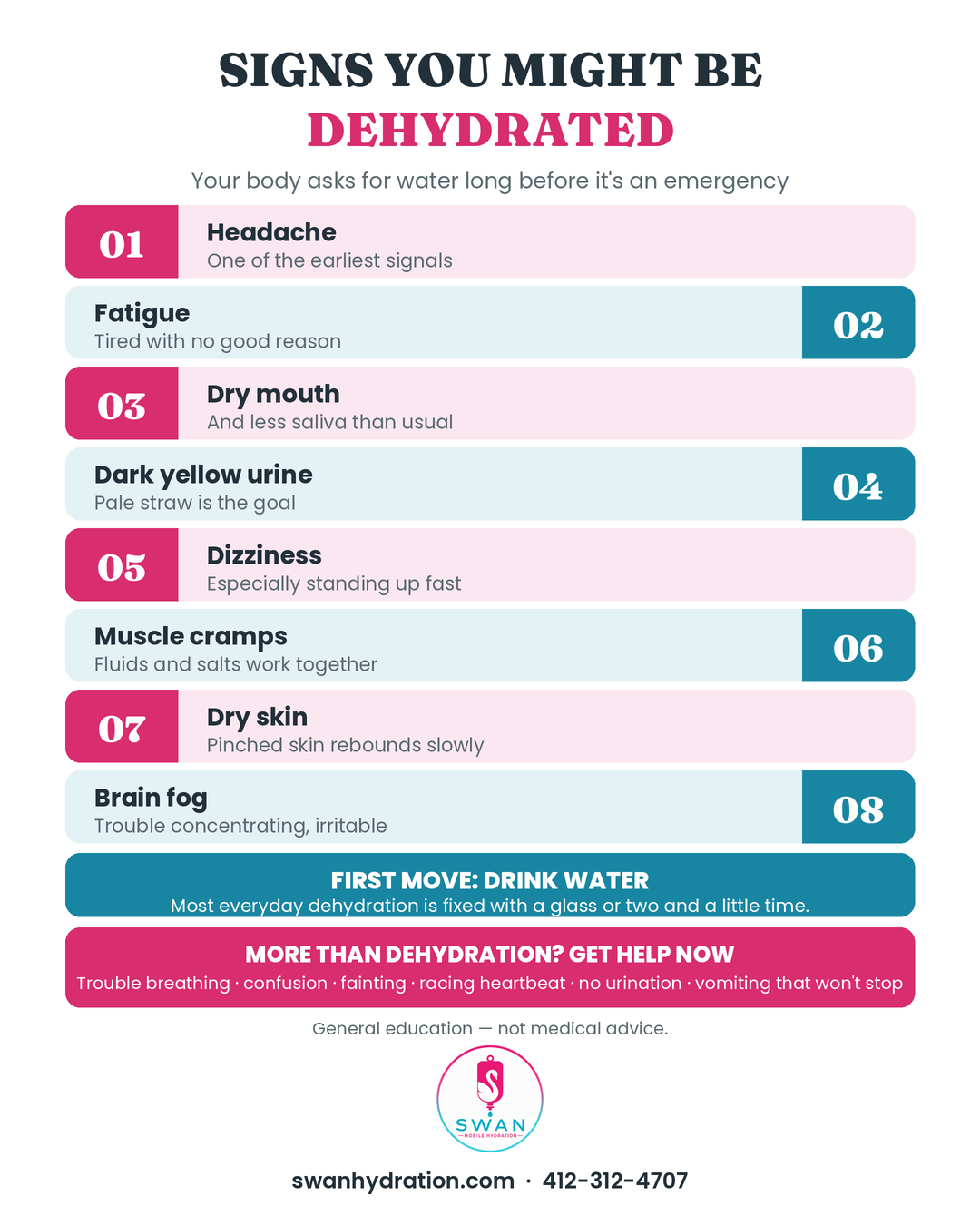
The everyday eight
The early signs are unglamorous: a headache (one of the first signals), fatigue with no good reason, dry mouth, and dark yellow urine — pale straw is the goal. Then come dizziness, especially standing up fast, muscle cramps (fluids and salts work together), dry skin that rebounds slowly when pinched, and brain fog — trouble concentrating, a short fuse.
And here's the part I say to every client: the first move is a glass of water. Most everyday dehydration is fixed with a glass or two and a little time. A drip is for when drinking isn't cutting it — or isn't staying down. If you want the full picture of what a visit involves, it's on our IV Menu.
Two groups deserve an extra look from the people around them. Older adults often have a quieter thirst signal — they can be genuinely behind on fluids without feeling thirsty. And anyone who's been ill, with fever or a stomach bug, is losing fluid faster than a healthy day ever takes it. If that's your parent, your partner, or you: don't wait for the dramatic signs. The early eight are the friendly warning.
When it's more than dehydration
Some signs are not "drink water and rest" signs. Trouble breathing, confusion, fainting, a racing heartbeat, no urination, or vomiting that won't stop mean get medical care right away — that's urgent-care or ER territory, not a house call. I'd rather lose a booking than have someone wait out a warning sign. General education, not medical advice — when in doubt, get checked.
— Mercedes Denham, RN Book at swanhydration.com or call/text 412-312-4707.