By Mercedes Denham, RN, BSN — Founder, Swan Hydration
Nurses think in numbers. Vitals, doses, rates. So when people ask me why hydration matters so much, I don't reach for a slogan — I reach for the figures. They're more convincing than any pitch.
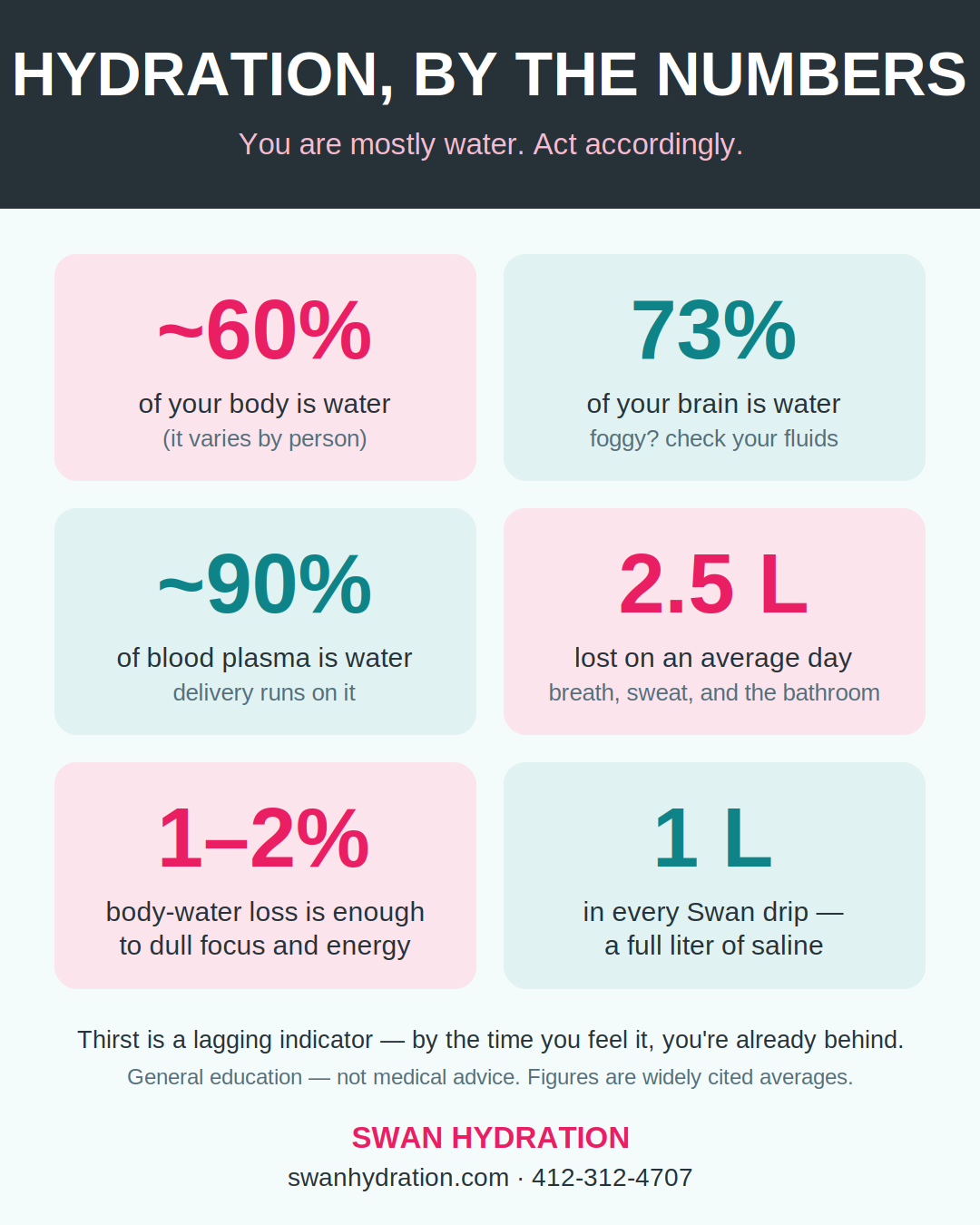
~60% of your body is water. It varies by person — age, build, muscle — but the average adult is more water than anything else. Hydration isn't a wellness trend. It's most of what you are.
73% of your brain is water. So is your heart. When people describe brain fog on a dry day, this is the number I think of.
~90% of blood plasma is water. Plasma is the delivery system — it carries nutrients, hormones, and cells where they need to go. Delivery runs on water.
You lose about 2.5 liters on an average day. Breath, sweat, and the bathroom, mostly. More with heat, work, exercise, caffeine, or a night out. That loss happens whether you replace it or not — the only question is whether you're keeping up.
Losing just 1–2% of your body water is enough to dull focus and energy. Not collapse. Not drama. Just a measurably worse version of your afternoon — the meeting you can't track, the workout that feels twice as long.
And thirst is a lagging indicator. By the time you feel thirsty, you're already behind. Thirst is the reminder, not the starting gun.
Where Swan fits
Every drip we run is a full liter — 1 L of saline, with whatever your provider decides belongs in it after your Good Faith Exam. Against a 2.5-liter daily loss, a liter is a serious catch-up, delivered in about an hour, at your home, office, hotel, or event.
But start with the simplest habit the numbers argue for: drink before you're thirsty. Keep the bottle filled. And on the days that math stops working — the race, the red-eye, the rough morning — you know where to find us.
General education, not medical advice. Figures are widely cited averages.